Phosphorus
Phosphore · P · 15
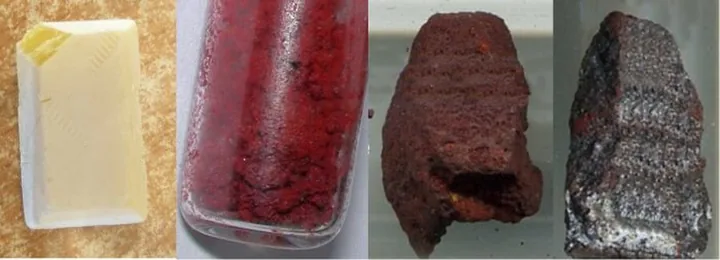
A non-metal with many faces, white, red or black. Essential to life (bones, DNA, cell energy), it is also the key ingredient of fertilisers and the secret of the striking strip on matchboxes.
1Identity card
- Atomic number
- 15protons in the nucleus
- Symbol
- P
- Atomic weight
- 30.974 uIUPAC standard value : 30.973761998
- Family
- Other non-metals
- Group · period · block
- 15 · 3 · p
- State at 20 °C
- solid
- Melting point
- 44.15 °Cwhite phosphorus
- Boiling point
- 280.5 °C
- Density
- 1.823 g/cm³at 20 °C
- Electronegativity
- 2.19Pauling scale
- Electron configuration
- [Ne] 3s2 3p3
- Electrons per shell
- 2 · 8 · 5
- Earth’s crust
- 1,000 g per tonne
- Discovery
- 1669Hennig Brand
- Place
- Hamburg (Germany)
2The phosphorus atom
An atom of phosphorus has 15 protons in its nucleus and, when neutral, as many electrons, spread over 3 shells.
3Discovery
In 1669, in Hamburg, the alchemist Hennig Brand was searching for the philosopher’s stone by boiling down large quantities of urine. He obtained a white, waxy substance that glowed in the dark and burst into flame in air.
It was the first element whose discoverer and date are known. Brand kept his secret at first; Robert Boyle rediscovered the process in London in 1680, and Lavoisier classed phosphorus as an element a century later.
Want to know more about Lavoisier, Boyle and other scientists? Visit Les inventeurs, a sister site devoted to scientists and their inventions (in French).
4Origin of the name
From the Greek phōs, “light”, and phoros, “bearer”: the “light-bearer”, because of the glow of white phosphorus in the dark.
5Where is it found?
Phosphorus is never found free in nature: it is extracted from phosphate rocks (apatites), of which Morocco has the largest reserves.
The human body contains about 700 grams, mostly in bones and teeth, but also in DNA and in ATP, the molecule that carries energy in our cells.
6Uses
7Did you know?
Despite its name, the glow of white phosphorus is not phosphorescence: it comes from a slow reaction with oxygen in the air.
In the 19th century, women working in white-phosphorus match factories suffered from a terrible jaw disease. White phosphorus was later banned from matches, in the early 20th century.
Safety: White phosphorus is highly toxic and ignites spontaneously in air; it is stored under water.
8Isotopes
One stable isotope, phosphorus-31. Phosphorus-32, radioactive (half-life 14 days), is used as a tracer in biology.
Isotopes found in nature and their abundance (CIAAW data)
9Its neighbours in the table
Elements in the same column often have similar chemistry; those in the same row have the same number of electron shells.